Preventing roadway tragedy through lived experience and policy advocacy.
We work alongside families, advocates, and lawmakers to strengthen roadway safety and prevent future loss in Colorado.
Legislative Advocacy in Colorado
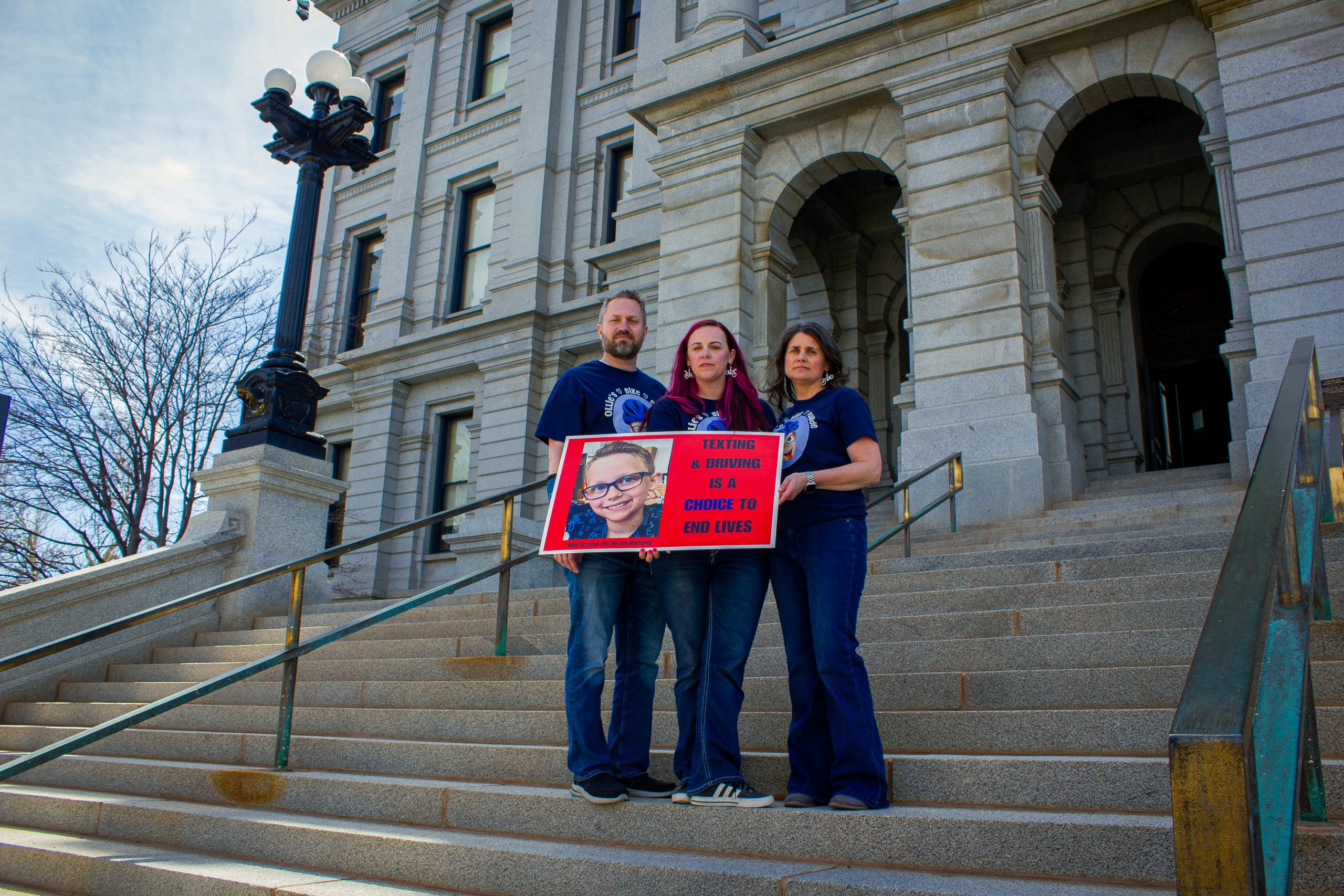
Ollie’s Bike Parade is rooted in lived experience and a commitment to preventing roadway tragedies through advocacy and community engagement. We believe meaningful change happens when communities and lawmakers work together before loss occurs–not only after.
SB24-065 – Hands-Free Driving Law
SB25-281 – Careless Driving Resulting in Serious Injury or Death (Signed 2025)
Clarissa Stratton speaking at the Colorado Department of Transportation in support of the Hands-Free Driving Law.
Governor Jared Polis signing SB25-281 into law.
Community engagement with Governor Jared Polis.
Coalition advocacy with families and organizations.
Roadway safety policy work
Colorado has taken steps in recent years to strengthen roadway safety laws and address preventable crashes caused by dangerous driving behaviors. Our advocacy and testimony have been part of broader statewide conversations alongside other families, advocates, and organizations working to improve safety outcomes.
2026 — Roadway Safety Legislation (including Magnus’ Law and related reforms) Continued efforts to improve crash investigation procedures and strengthen roadway safety systems across Colorado.
While each of these laws represents meaningful progress, they also highlight a larger reality: legislation alone is not enough without behavioral change, consistent enforcement, and cultural understanding of roadway risk. Real prevention requires alignment between what the law says, what people believe, and what actually happens on our roads.
key ongoing challenges
Even with stronger laws in place, roadway safety challenges in Colorado are still shaped by behavior, perception, and how crashes are recorded and understood. The issue is not only distraction — it is visibility and accountability in the data itself.
Distracted driving is significantly underreported in crash data In many cases, distraction is only recorded if it is self-reported or directly observed, meaning the true role of phone use and inattention is often not fully captured in official reports.
Law enforcement does not consistently investigate distraction factors In many crash investigations, officers are not required to determine or document whether a driver was using a phone unless clear evidence exists.
Crash labels often minimize contributing causes Incidents involving distraction may be recorded under broader categories like “careless driving” without identifying underlying behavioral causes.
Phone-related distraction is often hidden in “single-cause” reporting Many serious crashes are attributed to a single cause, even when multiple factors—such as attention loss or device use—may have contributed.
Public perception does not match crash reality There is a persistent belief that roadway deaths are unavoidable “accidents,” when research shows most serious crashes involve preventable contributing factors.
When distraction is not consistently recorded, it becomes easier for the public to underestimate its role—and easier for policy to lag behind reality. If we are serious about prevention, we must be honest not only about how people drive, but also about how we define, record, and respond to crashes on our roads.
Human life should not be the cost of someone else multitasking behind the wheel.
Roadway deaths are preventable, not inevitable. Real progress requires honesty, accountability, and a cultural shift in how we understand responsibility on the road.
“We cannot rely on victims alone to drive change. Real roadway safety requires communities that engage before, during and after a tragedy. The reality is that roadside loss can happen to anyone at anytime. It’s essential that we have systems that prioritize prevention, and lawmakers who act on the reality of what is hapening on our roads.”
join the work for safer roads
We invite community members, organizations, and policymakers to join us in building safer roads across Colorado.